
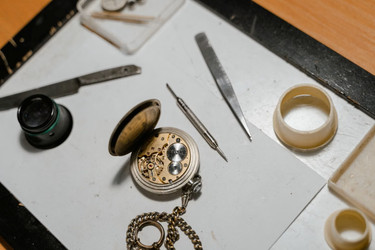
Quartz vs. Automatic Watches: Which Is Right for You?
Posted by Evan Saltzman on 4th Aug 2026
Quartz or automatic? It's the first question most people face when buying a nicer watch. Neither is "better" — they're different tools for different priorities. This guide explains how each one works, how they compare on accuracy, maintenance, and cost, and how to decide which is right for you.

Saltzman's sells and services both quartz and automatic watches.
How a quartz watch works
A quartz watch is powered by a battery. The battery sends a current through a tiny quartz crystal that vibrates at a precise, steady frequency, and that consistent beat keeps extremely accurate time. Quartz movements have few moving parts, which makes them accurate, low-maintenance, and affordable. You'll recognize a quartz watch by its once-per-second "ticking" second hand. The main trade-off is simple: the battery needs replacing every few years, though that's a quick, inexpensive job.
How an automatic watch works
An automatic — also called self-winding — is a mechanical watch with no battery. A weighted rotor inside spins with the motion of your wrist and winds a mainspring, which slowly releases energy to power the watch. It's a small mechanical marvel, often with a transparent caseback so you can watch it work, and it sweeps its second hand in a smooth glide rather than a tick. The trade-offs: it's slightly less accurate than quartz, it needs periodic service, and it will stop if left unworn for a day or two — unless you keep it on a watch winder.
Quartz vs. automatic at a glance
| Quartz | Automatic | |
|---|---|---|
| Power source | Battery | Wrist motion (mainspring) |
| Accuracy | Very high | High, but drifts slightly |
| Maintenance | Battery every few years | Periodic full service |
| The "feel" | Ticking second hand | Smooth sweeping second hand |
| Power reserve | Years on one battery | Roughly 1–2 days off the wrist |
| Best for | Grab-and-go accuracy, low fuss | Craftsmanship and heirloom appeal |
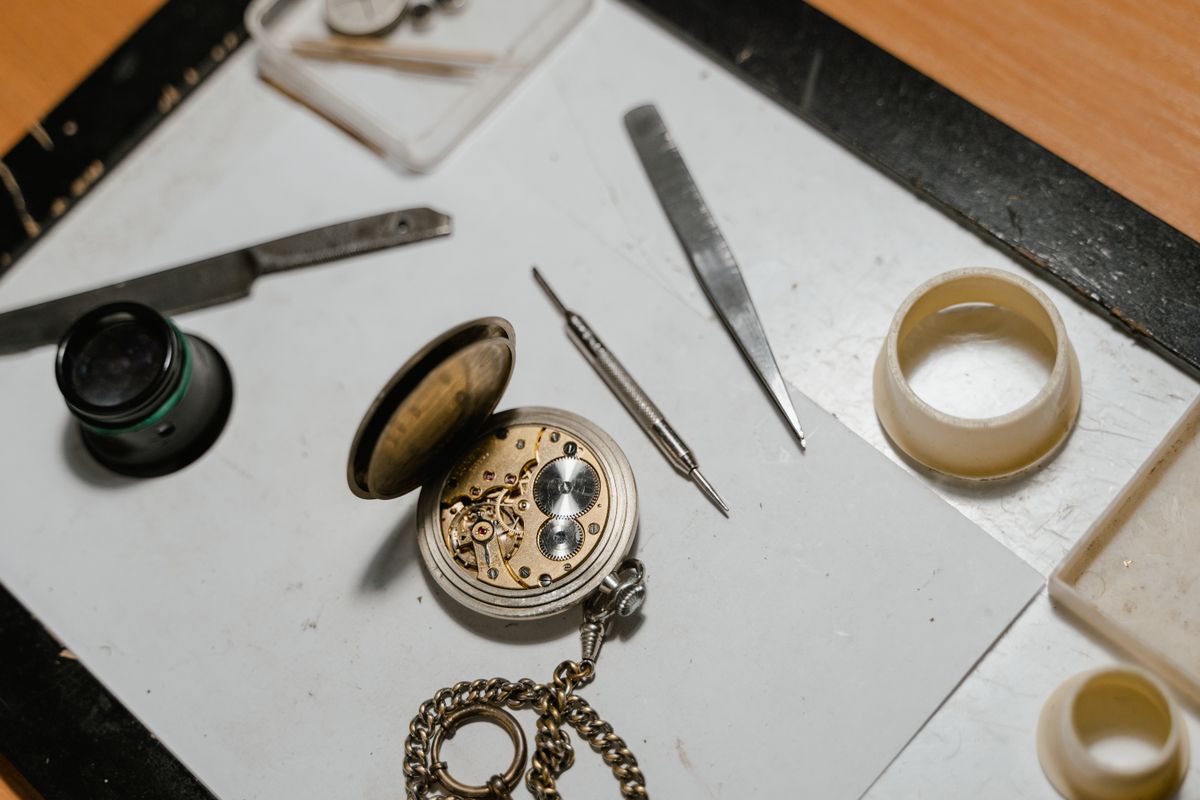
A mechanical movement, the self-winding heart of an automatic watch.
Accuracy: which keeps better time?
If precision is your priority, quartz wins. A typical quartz watch drifts only a few seconds per month, while a mechanical automatic may gain or lose a few seconds per day — still excellent, but you'll reset it more often. It's worth reframing this, though: an automatic isn't "inaccurate," it's simply mechanical, and many owners happily accept a few seconds a day as the character of a watch made of tiny gears and springs rather than a battery and a chip. If you need set-it-and-forget-it accuracy, go quartz. If you appreciate the mechanics and don't mind an occasional adjustment, an automatic will delight you.
Maintenance and long-term cost
The two types age differently. A quartz watch mostly just needs a fresh battery every few years, done quickly and affordably — ideally by someone who reseals the case so water resistance is preserved. An automatic watch has no battery, but its movement should be cleaned, lubricated, and regulated periodically to run its best and last for decades. That service costs more than a battery, but it's what allows a fine automatic to keep running for generations. Think of it this way: quartz is cheaper to keep running year to year, while a well-maintained automatic is built to outlive its owner. Either way, our certified watchmakers handle both in-house.
What about mechanical (hand-wound) and solar watches?
Two other types are worth knowing, because they sit near this comparison:
- Manual (hand-wound) mechanical — like an automatic but without the self-winding rotor, so you wind it by hand, usually daily. Same mechanical charm, a little more involvement.
- Solar / light-powered quartz (such as Citizen Eco-Drive) — a quartz watch that charges from light instead of using a standard battery, so you rarely think about power at all. Its rechargeable cell can eventually weaken after many years and be replaced professionally.
These give you even more ways to match a watch to how you like to live with it.
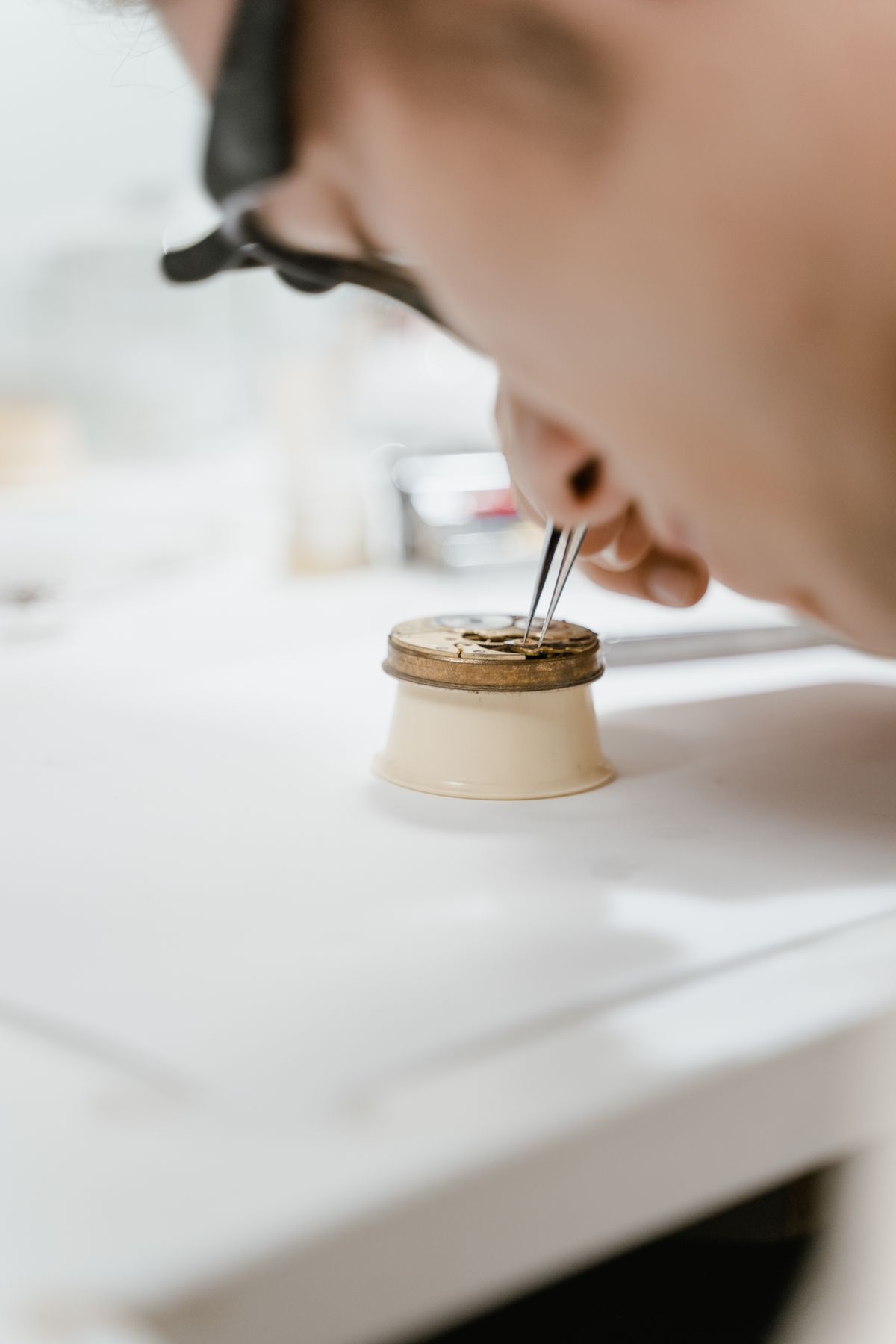
Both quartz and automatic watches are serviced in-house.
A brief history: the quartz revolution
The two technologies aren't just different — they represent a turning point in watch history. For centuries, every watch was mechanical. Then, around 1969, the first commercial quartz watches arrived and changed everything: suddenly a watch could be far more accurate and far cheaper to produce. The shift was so dramatic it's often called the "quartz crisis," because it upended the traditional mechanical watch industry almost overnight. Mechanical watchmaking survived and ultimately thrived by leaning into craftsmanship, heritage, and the sheer artistry of a movement made of hundreds of tiny parts. That's why today an automatic is often chosen for its soul and story, while quartz is chosen for its precision and value — two philosophies born from the same moment in history, both still going strong.
Common myths, cleared up
- "Automatic watches never need winding." They wind from your motion while worn, but if they sit unworn they'll stop and need a wind or a winder.
- "Quartz watches are disposable." A quality quartz watch can last decades with basic care and battery changes — it's not throwaway.
- "Automatic is always more expensive." Prices overlap enormously; there are affordable automatics and premium quartz watches alike.
- "You can over-wind an automatic." Modern automatics have a clutch that prevents over-winding under normal use.
Which should you choose?
Choose quartz if you want a watch you can pick up any morning and trust to be accurate, with minimal upkeep and a friendlier price. It's ideal for a rugged everyday watch, a sports watch, or anyone who values convenience above all. Choose automatic if you love mechanical craftsmanship, enjoy the smooth sweep of the second hand and the view through a display caseback, and like the idea of a watch you can service and pass down for decades. It's the natural pick for a special-occasion watch or the start of a collection. Many watch lovers end up owning both — a quartz for grab-and-go days and an automatic for when they want to enjoy a bit of mechanical soul.
Either way, we've got you covered: Saltzman's sells and services both quartz and automatic watches — from battery changes to full mechanical overhauls — in-house since 1940.
Try both at Saltzman's
The best way to decide is to feel them on your wrist. In our Cranston and Newport showrooms you can compare a ticking quartz watch and a sweeping automatic side by side, see the difference a display caseback makes, and get honest guidance from a team that has helped Rhode Islanders choose watches since 1940. Whether you land on the effortless accuracy of quartz or the mechanical romance of an automatic, we'll help you find a watch you'll love wearing — and we'll be here to keep it running for years to come. Browse the full range on our watch collection page first if you'd like.
Caring for each type
A little care keeps either watch at its best. For a quartz watch, the main things are timely battery changes — ideally with a gasket check so water resistance is preserved — and removing the battery if you'll store the watch unused for a long time, to prevent leaks. For an automatic, wear it regularly or keep it on a winder if you like it always ready, wind it gently if it has stopped, and have the movement serviced on a sensible interval so it stays accurate for the long haul. Both types benefit from being kept away from strong magnets, extreme heat, and hard knocks, and both should have their water resistance re-tested periodically if you wear them near water. Whatever you own, our watchmakers can advise on the right care and handle the work in-house.
Want to compare them in person? Try quartz and automatic side by side at either Rhode Island location.
Browse Watches at Saltzman'sFrequently asked questions
Which is more accurate, quartz or automatic?
Quartz is more accurate. A quartz watch typically drifts only seconds per month, while an automatic may gain or lose a few seconds per day.
Do automatic watches need a battery?
No. Automatics are powered by wrist motion and a mainspring, so there's no battery to replace — but they do need periodic service.
Why does my automatic stop when I don't wear it?
Automatics store roughly a day or two of power. If left unworn beyond that they wind down and stop; a winder or a quick manual wind gets them going again.
Which lasts longer?
A well-maintained automatic can run for generations, which is why many become heirlooms. Quartz watches are long-lasting too, but are usually less oriented toward long-term servicing.
Is quartz or automatic better for a first nice watch?
Both are great starting points. Quartz offers easy, accurate daily wear; automatic offers craftsmanship you can grow attached to. It comes down to what you value — and you can try both with us.
Do you service both types?
Yes. Our certified watchmakers handle battery replacement for quartz watches and full overhauls for automatics, all in-house.
Saltzman's Watches — Cranston · 401-946-0930 | Newport · 401-841-0011
A Rhode Island family watch business since 1940.